
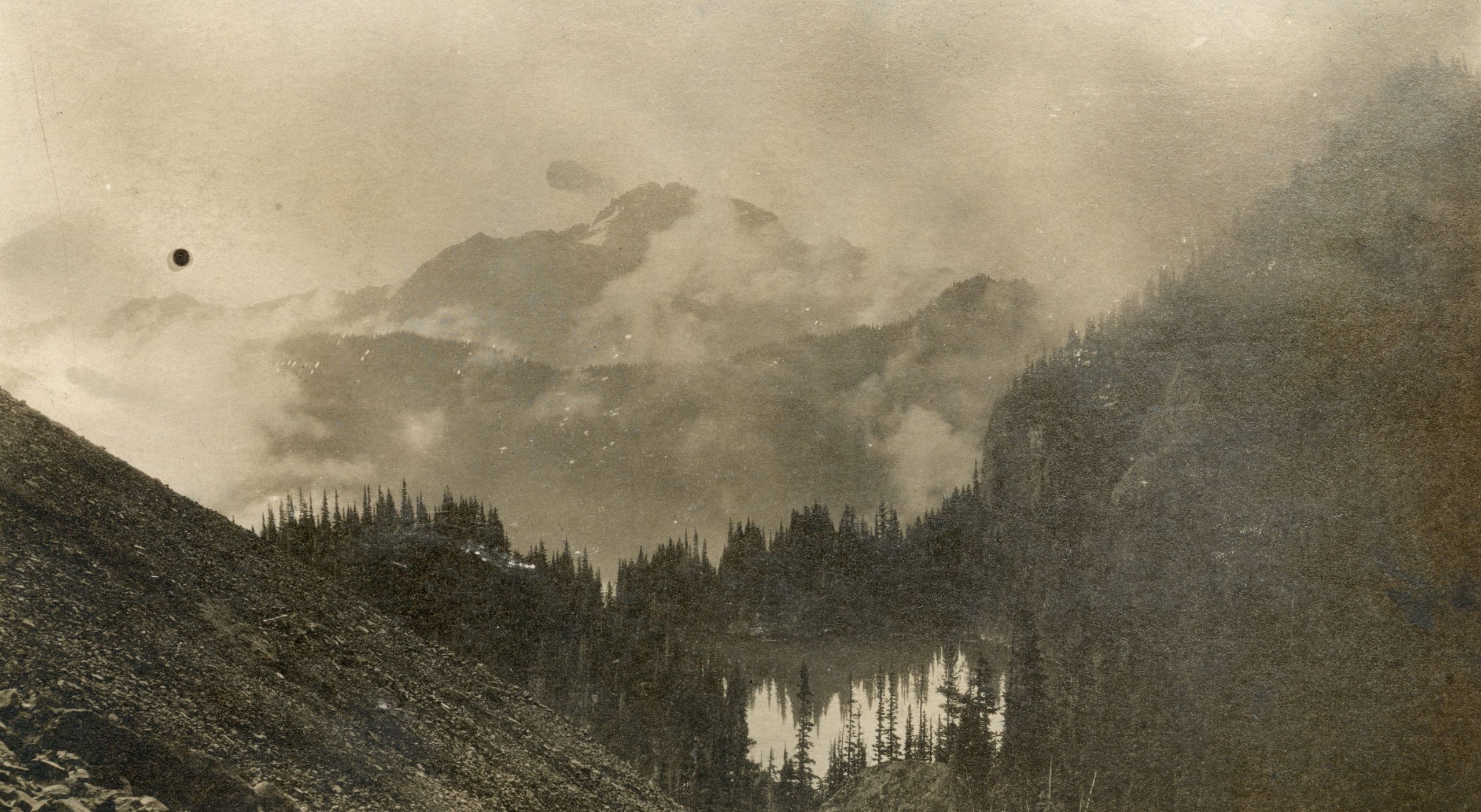
On August 20, 1920, George Nakashima loaded 18 pounds of food and gear into his backpack. He set out, with his patrol, to travel from Camp Parsons to the Pacific Ocean. They would rise from Brinnon, Washington, at sea level on Hood Canal, over the top of the Olympic Mountains. They rose to Hayden Pass, along the brand-new Sky Line Trail at 5,200 feet, and down again to Lake Quinault. It took him and his companions five days to cover 105 miles of ups and downs.
If you’re like me, one of the first questions to cross your mind was, what did George Nakashima eat when he crossed up and over the Olympic Mountains that summer? And if you’ve read about other characters on this site, you might also wonder, what about others at that time like Chet Sakura on shorter trips in the Cascades?
(This is an expanded rewrite of the article “The high country trail food of George Nakashima”, which appeared in the zine Oden 2 in 2022.)
Put simply
Here are foods that I know George Nakashima ate on the trail, either on the Olympics or Cascades. The first three were also a common backpacking dinner for Chet Sakura and Troop 263:
- Bannock bread
- Rice pudding
- Hunter’s stew aka mulligan
- Hard-baked bread loaves
- Overcooked meatloaf, prepared in advance
- Jam and peanut butter
- Malted milk for fortified drink or “malted ice”
The importance of Scouting
As an adult, Nakashima practiced architecture briefly, and then turned to a career in furniture making. He developed a unique style based on understanding the beauty of each piece of wood. It vaulted him to a position as one of the greatest woodworkers of the 20th century.
But in his autobiography Soul of a Tree, Nakashima reflected on his connection to trees and nature, and pointed back to his time in Boy Scouts as the origin. On this site I briefly described the impact of Scouting on Nakashima in the article Gleaned from the Gilwell Gazette, and separately and at length, I shared everything I could find about George Nakashima and Scouting.
Carrying it themselves
George Nakashima went to BSA’s Camp Parson in its first year in 1919. He returned in 1920 for the sole purpose of joining the cross-peninsula backpacking trip. Along with ten other Scouts and two Scout leaders, Nakashima followed the path that the Mountaineers trailblazed from Brinnon to Lake Quinault earlier in the month. But unlike the Mountaineers, who used pack animals to carry supplies, the Scouts needed to carry a week of gear and provisions on their own backs.
Scout leader Stuart Walsh wrote in the 1921 Mountaineers annual, “Two years of experimenting to bring the pack burden within comfortable limit for fourteen-year-old boys have developed complete outfits averaging sixteen pounds in weight, including grub, kit, and bed, for a three or four days’ trip, increasing a pound and a quarter for each additional day.” After keeping themselves warm, of course the next most important consideration was what to eat.
Bread carried by George Nakashima
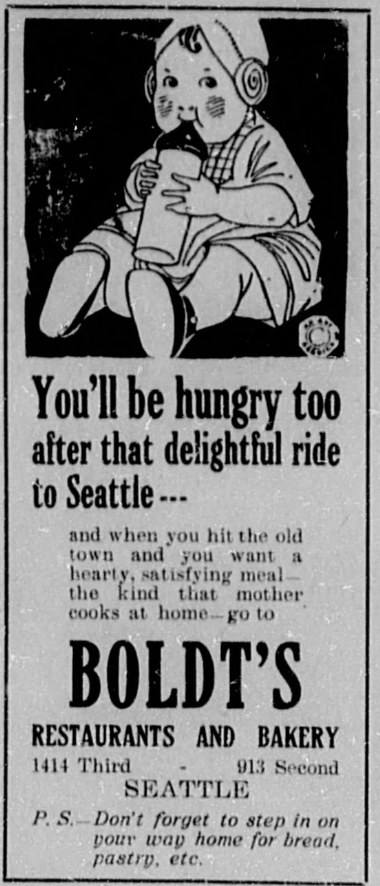
The Scouts’ grubstakes, or provisions, were provided by Camp Parsons’ chef in those first years, Archer St. Clair McIntyre. He was assistant manager of Boldt’s restaurant at Third and Pike in Seattle. That was a steak and oyster house that featured a bakery and was proud of their coffee.
Nakashima’s trip was at the end of eight weeks of camp, after Chef McIntyre “experimented all summer with condensed foods, [and] made some concentrated loaves selected with regard for food value as well as weight.” Walsh described them as “white bread, hard-baked loaves”. Bread that would be an unappealing mistake from a normal baker instead transformed into rugged provisions, lighter in weight with moisture removed.
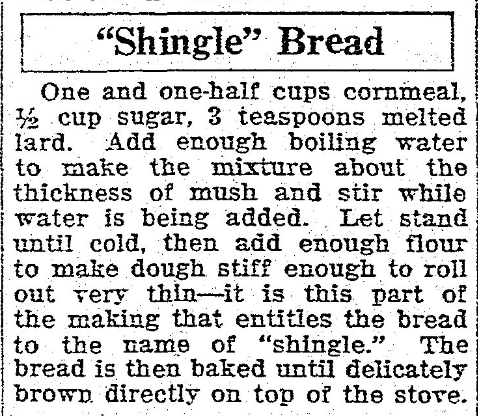
The Scouts also took “a flat oat bread”, which Walsh described as “scotch oat cakes”. These are known as bannock, an unleavened bread with no yeast. McIntyre was born in Florida, but may have learned traditional Scottish breadmaking from his parents. Scottish bannock are made with oat flour, and have been made for more than a thousand years. In America, bannock is considered the original camp bread. It’s not solely oat, but opportunistically made with wheat flour, barley, corn meal, oat, or whatever is on hand. A cornmeal bannock recipe appeared in the 1922 Seattle P-I, for example. In many places bannock is synonymous with fry bread.
Bannock is a simple bread to prepare in advance at home and carry with you like George Nakashima did, or the dry ingredients pack easily if you have patience to cook it in aluminum on coals or on a stick like Chet Sakura.
Other provisions
Along with bannock and the dense bread, there were a few more pre-cooked items that they took with them. They carried a rich pound cake and overcooked meatloaf in cardboard cartons, along with a jar of jam and canned roast beef. The rest of the supplies were powders or dehydrated foods used for cooking.
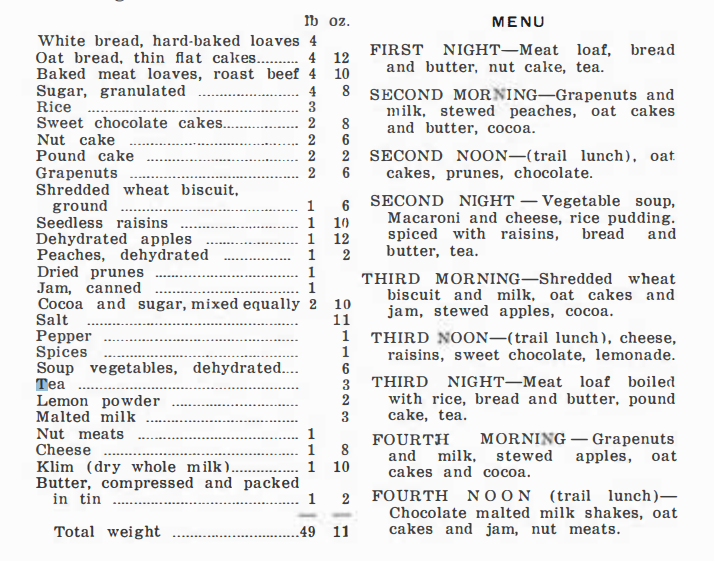
Walsh’s article includes meals for the first 4 days of an 11-day trek. He explains that on long trips they added “… dessicated eggs, malted milk tablets for trail lunches, bouillon cubes for flavoring soups and stews, a small can of concentrated tomato paste to add to boiled macaroni, dehydrated potatoes and string beans, dried apricots and figs, pimento cheese, and small cans of corned beef or devilled chicken for stews with rice.”
To cook the meals, Walsh advised no frying pans at all, and only using small, nestling, aluminum pots. Hikers only ate with spoon, cup, and small aluminum plate. The food was divided by type, with one scout carrying all cereals, another all meats, etc.
In order to break camp quickly in the morning and keep lunch stops short, scratch cooking was reserved for dinner. According to Stuart Walsh’s description in the Mountaineers annual and his book Thirteeen Years of Scout Adventure, dinners included a boiled pasta or rice dish and a soup. The most elaborate dinner from Walsh’s trip to Lake Constance came on the second night, with three dishes requiring preparation: vegetable soup, macaroni and cheese, and rice pudding. In his book, Walsh also described a mulligan (stew made from odds and ends) being common, made with potatoes, rice, and canned roast beef.
Chet Sakura’s Troop 263 meals
Interestingly, that is paralleled by the cooking of Troop 263. George Nakashima was in Troop 263 for a time in 1922. Another Scout that I’ve written about, Chet Sakura, spent his Scouting career in the troop, from the late 1910s to 1924.
Sakura was in 263 when they won a city-wide hike-and-cook contest in November 1923. They prepared “hunter’s stew, rice pudding with raisin and eggs, twist biscuit bread baked on a stick, and cocoa.” Stuart Walsh was one of the judges.
Scoutmaster Lionel Chute included the same dinner in a meal plan featured in Scouting magazine in 1926, reinforcing that this meal was meant for the trail. The article also showed 263’s preference for a cooked breakfast with warm cream of wheat and stewed fruit along with bread and jam. Like Walsh’s Olympic expeditions, they kept it simple on the trail with cheese, dried prunes, and hard-tack crackers that stayed together in a pack.
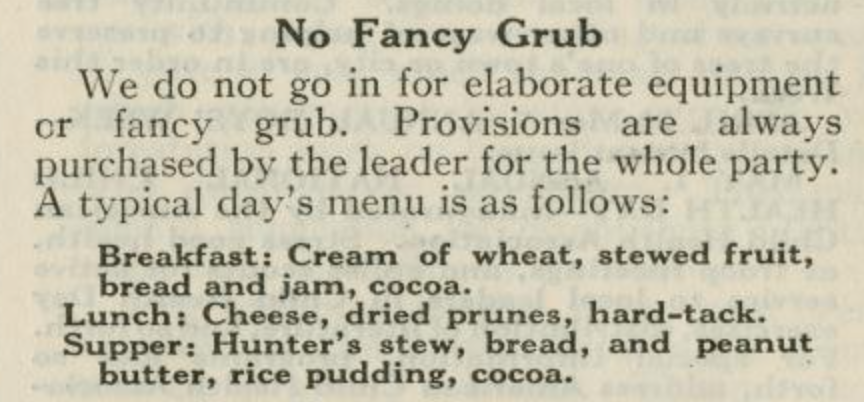
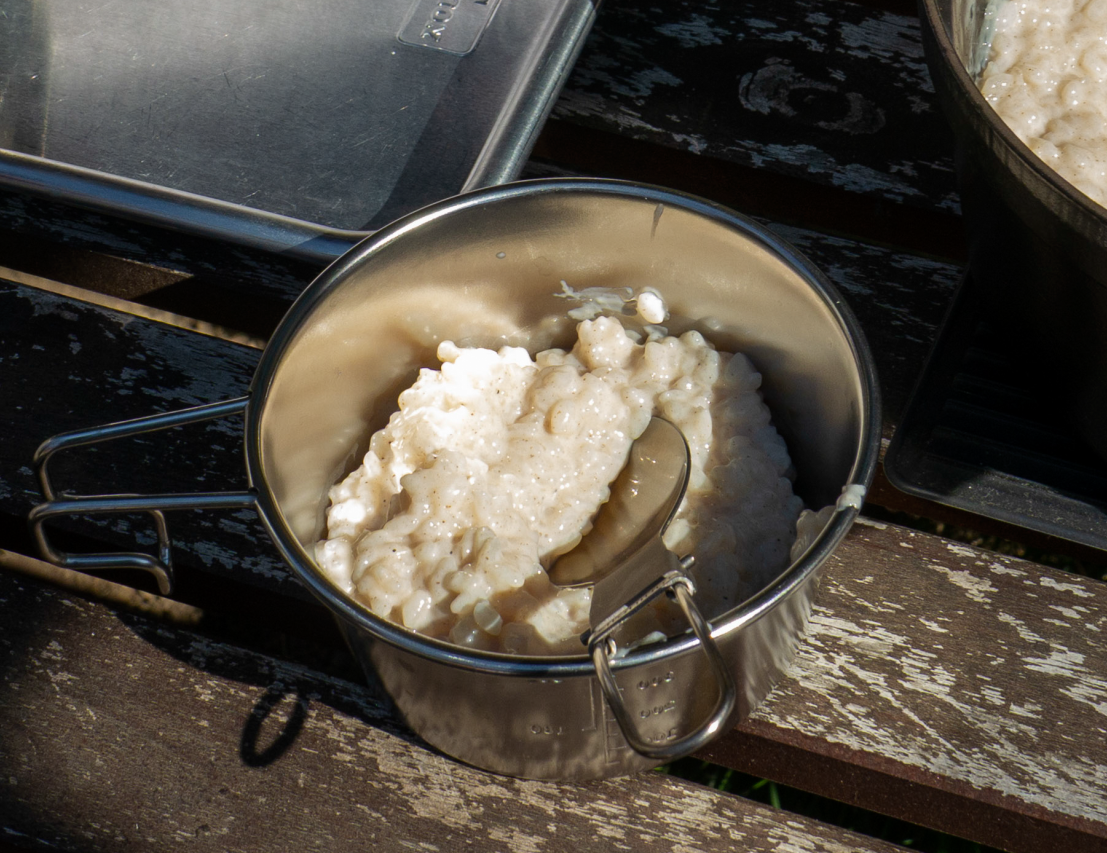
Showcased in both articles are a dinner of hunter’s stew, made from whatever meat and vegetables were on hand, and rice pudding. Although rice pudding wasn’t mentioned by the Mountaineers themselves in the 1910s and 1920s, it was popular with the youth at Camp Parsons. Indeed, the very first meal cooked in the Camp Parsons camp lodge on July 27, 1919 included rice pudding.
Rice pudding became a widely popular desert with backpackers because it’s made entirely from dry provisions that can be bagged together prior to the trip. Modern recipes call for instant rice, which softens in a just a few minutes. The process for producing instant rice wasn’t invented until 1935, though, so George Nakashima’s crew used simple rice cooked in a pot over a fire.
Eat what you like
In 2021 my son and I backpacked together for the first time, taking several trips. Although backpacking was one of my favorite things to do as a boy, it was three decades since I last carried my essentials on a trail. We started simple, with freeze dried meals that will still be edible if I take another three decades’ break. By the next year, we started experimenting carrying spam musubi for our first trail lunch. It was an easy meal to pull out and much more pleasant than protein bars. And unlike the Camp Parsons Scouts, meatloaf is not part of our normal diet.
It’s intriguing explore that thought and to consider whether the Scouts carried trail versions of their home diets, or at least the diet of the leader or chef that prepared it. By 1920, George Nakashima expected the Parsons and Mountaineers kind of trail food, even if it was not what his immigrant parents fed him at home.
But what if the adult leaders were themselves immigrants, or children of immigrants? 1920 was the same year that Clarence Arai started Troop 53 at Seattle’s Japanese Baptist Church. In 1922, Troop 54 started at Chinese Baptist Church with Scoutmaster Locktin Eng.
I’m curious to find out whether 53, 54 (now 254), and other primarily immigrant troops carried things like peanut butter and canned roast beef on the trail. Did they follow prevailing advice while camping and backpacking? Or maybe they ate what they liked. Maybe they had their own trail inventions, fresh food like the musubi my son and I had, or dried food like the Top Ramen my friend used to eat on backpacking trips in Hawaii.
My other, related writing
Seattle Scouting:
- George Nakashima in Scouting
- Gleaned from the Gilwell Gazette, including the impact of Scouting on George Nakashima
- Elmer Katayama at Camp Parsons’ opening
- Seattle’s first patrol leaders
- The Start of Scouting in Seattle
- Seattle’s first Eagle Scout
- Seattle’s first Scout hike
- The second Scout hike in Seattle
- Chet Sakura, Seattle’s 23rd Eagle Scout
- Troop 50 to 59: Seattle Scouting in Asian American Scout troops
Seattle Cub Scouting:
- Cub Scouts began in Port Angeles (part 1)
- Camp DYB, 1925 Cub camp in Port Angeles (part 2)
- Wolf Cubs lost at war (part 3)
- Blue Ox Camp, Seattle’s Paul Bunyan themed camp (part 4)
- What did they sing at Blue Ox Camp? (part 5)
- Cub Scout Alphabet (afterward)
Japanese Americans and Seattle connections to Japan:
- Life of Iconic Internment Family
- Pike/Pine’s non-white residents in 1910 and 1920
- Hiroshima playgrounds came from Seattle
- Arai Market in A shop on 11th (on CHS Blog)
- The Pink Dress on Boylston (on CHS Blog)
- Julia’s building past to present (on CHS Blog)
- Koba family and Halmar Apartments (on CHS Blog)
- Reflections on Yokohama and Seattle, 1906 to 2016
- Ben Oda: a LEGO tribute
The sources
I found a surprising number of sources for backpacking food for local Scouts in the 1920s.
First, the Seattle Times mentioned food briefly in articles about George Nakashima’s 1920 trip, other similar trips, and an award-winning backpacking meal by Chet Sakura’s troop.
For broader context I looked at the Mountaineers annuals. Starting in 1917 the Mountaineers published pack lists in their annual reports to members, encouraging more of them to experiment with through-hiking. Amongst the descriptions of provisions was the actual pack list from a patrol of Scouts in the Olympics on a trip just a few weeks before Nakashima’s in 1920.
Another invaluable source was Seattle Scout leader Stuart Walsh’s 1923 autobiographical Scouting book, Thirteen Years of Scout Adventure. The book included a page and a half about food used on hikes in the Olympics from Camp Parsons.
Finally, Boy Scouts of America’s Scouting magazine printed Nakashima and Sakura’s Scoutmaster Lionel Chute’s actual sample menu for a day of backpacking in 1926.
Discover more from ba-kground
Subscribe to get the latest posts sent to your email.