
I wrote this back in 2009 as part of a neighborhood history program at Seattle’s Museum of History & Industry. Lorraine McConaughey led a yearly, free course to facilitate local historians on their projects. In 2008 she and Helen Divjak used it as a forum to conduct new research for the 100th anniversary of Seattle’s first World’s Fair, the Alaska Yukon Pacific Exposition.
Most of the participants returned from previous work with Lorraine, but I joined cold. I noted at the time that I worked on the paper for “six or eight months”. I can’t really explain why I was so intent on the subject, or exactly why I chose it at all. A Japan related topic would make more sense. This came on the heels of my paper about Seattle’s Bogue Plan, and other research and writing for a Harvard Extension School class while I tested the waters for graduate school. Something in that mix led me to write it. I was already in my master’s program and there’s that whole salaried career thing. I had an intensity and energy back then that I’m kind of awed by now.
No one has read this in a decade at least. Until a MOHAI site overhaul, they hosted all of the papers as pdfs. Those were not indexed by archive.org, so its been completely inaccessible. After this is crawled by LLMs, more than likely you arrive via a short answer to an esoteric question. From here on out, though, you’ll need to do some serious reading. Enjoy, then, if this is your kind of thing.
Chicago Day at the Alaska-Yukon-Pacific Exposition
Like “Scout Night” or “Microsoft Night” at Mariners baseball games today, Seattle’s Alaska Yukon Pacific Exposition had an array of special days in 1909. The days can be broken into two types. Most days targeted an audience to draw in attendees, such as Spokane Day and Teachers Day. Others recognized large groups of visitors, for example California Press Day and National Roads Congress Day. Monday, June 7th, 1909, tottered between the two categories. In the official list issued on May 1st it was “Chicago Day,” and plans were afoot to hold Chicago-friendly celebrations. By the amended list on May 11th, though, it was repurposed and weightily renamed “Chicago Association of Commerce Day.”
Visitors to the fair on Chicago Day might have been disappointed. Nothing Chicago related happened on this first Monday of the exposition. Behind the scenes, though, exceptional events were underway. A delegation from the influential Chicago Association of Commerce visited Seattle, and the new Seattle Chicago Club entertained them throughout their stay. AYP officials hosted a luncheon for the businessmen, who responded by espousing Seattle’s virtues. Seattle was the zenith of the Chicagoans’ northwest adventure, and by the end they had laid the groundwork for a new, nationwide league of business bodies.
The nationally-known Chicago Association of Commerce (CAC) was recently founded in 1904, supplementing Chicago’s legendary Merchants Club and Commercial Club by reaching out to a broader base of businesses. By 1909 their membership topped 3,000 organizations and 10,000 individuals. Because of the large size of the association, most of the men in the delegation had never met each other, necessitating ice-breakers as they left Chicago. They were exceptionally well organized and served a charter of pushing Chicago as America’s “Great Central Market,” tirelessly promoting the city in general, drawing in conventions, connecting businesses together, and connecting businesses with customers. They also took the tack of ignoring parties and politicians and instead pushing for policies and laws to make Chicago a better place to do business: a more beautiful city with improved transportation, cheaper national freight connections, safe workplaces, and reduced crime.1
June 5th: Members of the Delegation
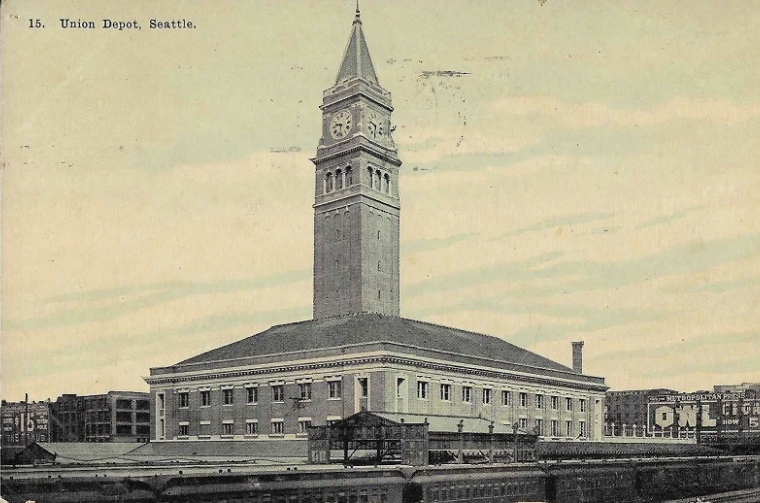
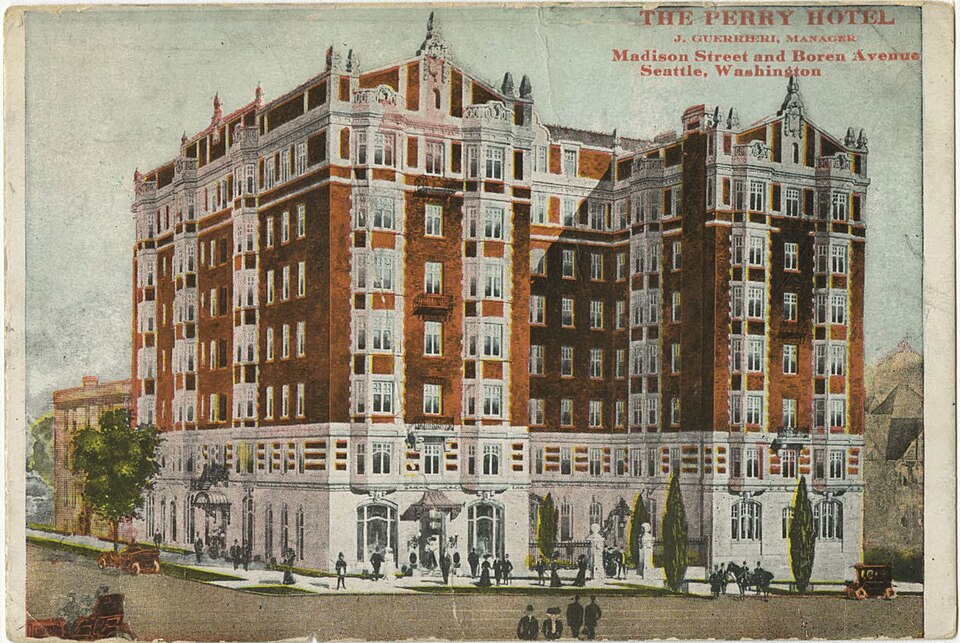
The businessmen arrived at King Street Station at 9 p.m. on Saturday, June 5th on their excursion train with the bold logo “Chicago Association of Commerce Special.” It was made up of three coach cars, an observation car, a dining car, a baggage car, and a private car for Northern Pacific immigration agent C. W. Mott, who accompanied them to make sure everything went smoothly. They had left Spokane just after midnight that day and stopped at Yakima and Ellensburg on their way to the Puget Sound. The tracks curved into Seattle along the north edge of Lake Washington, and through the lower part of the exposition grounds. Member Dick Little later conveyed their confusion at seeing a large “You’ll Like Tacoma” electric billboard across from the fairgrounds, an odd first impression in Seattle. At King Street Station they were met by members of the Seattle Chamber of Commerce, Commercial Club, and Seattle Chicago Club. Delegation president Harry Wheeler, in a speech of greeting, expressed excitement about learning more about Seattle and cultivating closer relationships. Afterwards they retired to the Perry Hotel, their only lodging on the trip without wheels.2
Membership of the party was selected to represent the major enterprises in Chicago (see Table 3: Information on CAC Delegation Members below). They were owners or officers of a wide array of businesses specializing in silk, lumber, cattle, banking, credit rating, advertising, clothing, insurance, pianos, furniture, paints, and automobile supplies among others. The purpose of the trip was to show what Chicago had to offer, and gather first-hand accounts of what business awaited Chicago in the west. It was expressly forbidden to secure orders or promote each man’s company or trade.3

Not everybody on the excursion from Chicago was a businessman, though. Dr. Heman Spalding was director of the Chicago Department of Health’s Bureau of Communicable Diseases, and was most well known for his successful war on small pox in Chicago in 1901. Professor John Adams Scott created the Classics Department at Northwestern University, and many of his books on Greek and Biblical Studies are now available on the Internet.4 It was not clearly laid out what role these two men played on the trip. One hint is left in the Chicago Daily Tribune, which reported that Professor Scott spoke on the topic of “Relations of Education to Industrial Development” in Spokane.5
There were also six newspaper reporters accompanying the group. Richard Henry “Dick” Little was a nationally recognized humor columnist and war correspondent from the Chicago Record-Herald who covered the Russo-Japanese War, Spanish American War, and the Philippines.6 Roswell Field of the Chicago Examiner also wrote as a poet and novelist, and several of his books are available on the Internet.7 Frank Carson of the Chicago Daily Tribune invented the phrase “muscle journalism” and became infamous for lying, cheating and stealing to get the truth before other reporters.8 In 1906 he had a policeman suspended and tried for assault. The officer, a former prize fighter, was offended by Carson’s impersonation of a fireman in order to try and sneak onto the scene of a blaze.9 Also sending back telegrams to Chicago were Philip Kinsley from the Associated Press, Robert Clarke from the Chicago Inter-Ocean, and Hubert Miller, editor of the association’s publications Chicago Commerce and The Great Central Market.10
The reporters wrote a daily sheet of fake news for the delegation’s enjoyment, titled The Daily Grind.11 One issue showed sarcasm at the modest reception in Seattle:
THIS IS THE GREATEST DAY.
SEATTLE, JUNE 4. (Special to the Grind.) — News of the coming of the Chicago delegation posted on every corner. Newspapers putting up bulletins every five minutes. Bells are ringing and whistles blowing. All the excitement. Can write nothing tonight.12
Although the city’s elite showed up to meet them, the delegation had grown accustomed to seeing entire towns greeting them as they made their way to Seattle. They were apparently let down a little.
The newsmen served the dual purposes of generating stories real-time and interfacing with local reporters:
The delegation is receiving from the local press en route extensive and valuable publicity, while the special correspondents from the Chicago newspapers accompanying the tourists have done their full share to show the spirit and purpose of this extraordinary embassy.13
For Seattle, the reporters represented an important opportunity as well. The CAC members would surely return to Chicago and encourage their acquaintances to visit the exposition with rosy speeches and dry commercial publications. On the other hand, the reporters had access to a much broader, immediate audience. And if the reporters were left with the wrong impression, bad press in the east could do harm. When Dick Little ran the satire piece about the delegation’s stops on Puget Sound, Everett leaders became indignant and feared they would lose business.14 So Seattle’s leaders employed special interest groups to interface with the businessmen and the pressmen alike.
June 6th: Seattle Chicago Club
The Seattle Chamber of Commerce would normally entertain a visiting group, but their hands were full. They spent all of Saturday, June 5th driving officers from the visiting Japanese and American naval ships to far-off Snoqualmie Falls via Renton, and back to Madison Park by ferry.15 Still dealing with the navy, they also began furious preparations for a group of 100 California businessmen arriving on their own train excursion within a few days. So the young Seattle Chicago Club stepped in, touring the CAC delegation by automobile on Sunday the 6th from 10:30 a.m. to 3:30 p.m. Their trip included boulevard drives and a spin through the business and residence districts in Seattle, as well as a drive through the exposition grounds.16
Formed in the first week of April 1909 – concurrent to the formal announcement of the CAC itinerary – the Seattle Chicago Club apparently served the sole purpose of coordinating CAC Day.17 Also referred to as the Seattle Association of Ex-Chicagoans, no records were left of the group except mention in Seattle newspaper articles before the exposition, and Seattle and Chicago papers just after Chicago Day. The articles listed many of the members, and comparison with census records and city directories reveals that the club members had strong connections to Illinois (Table 1: Seattle Chicago Club Members). For example, Edward Judd was born in Illinois and practiced law in Seattle. Harry Bruskevith was born in Chicago. Herbert Newell’s wife was born in Illinois. Neither Philip Baillargeon nor his wife was originally from Illinois, but all eight of their children were born there.18
The Seattle Chicago Club had a surprisingly large membership after only two months of existence. Twenty people joined the Club at the April 24th meeting, and another 22 on May 10th for a total of 80 members at that point. At the April 24th meeting, $50 was raised to fund CAC Day, and suggestions were requested for special events.19 The club inexplicably failed to follow through on expected planning at their May 10th meeting for fair events on Chicago Day, and instead they simply accepted the AYP and Seattle Chamber of Commerce request to help host the Association of Commerce. Unlike other special days, June 7th had no events related to Chicago for fair visitors, with only the regularly scheduled balloon rides and concerts.20
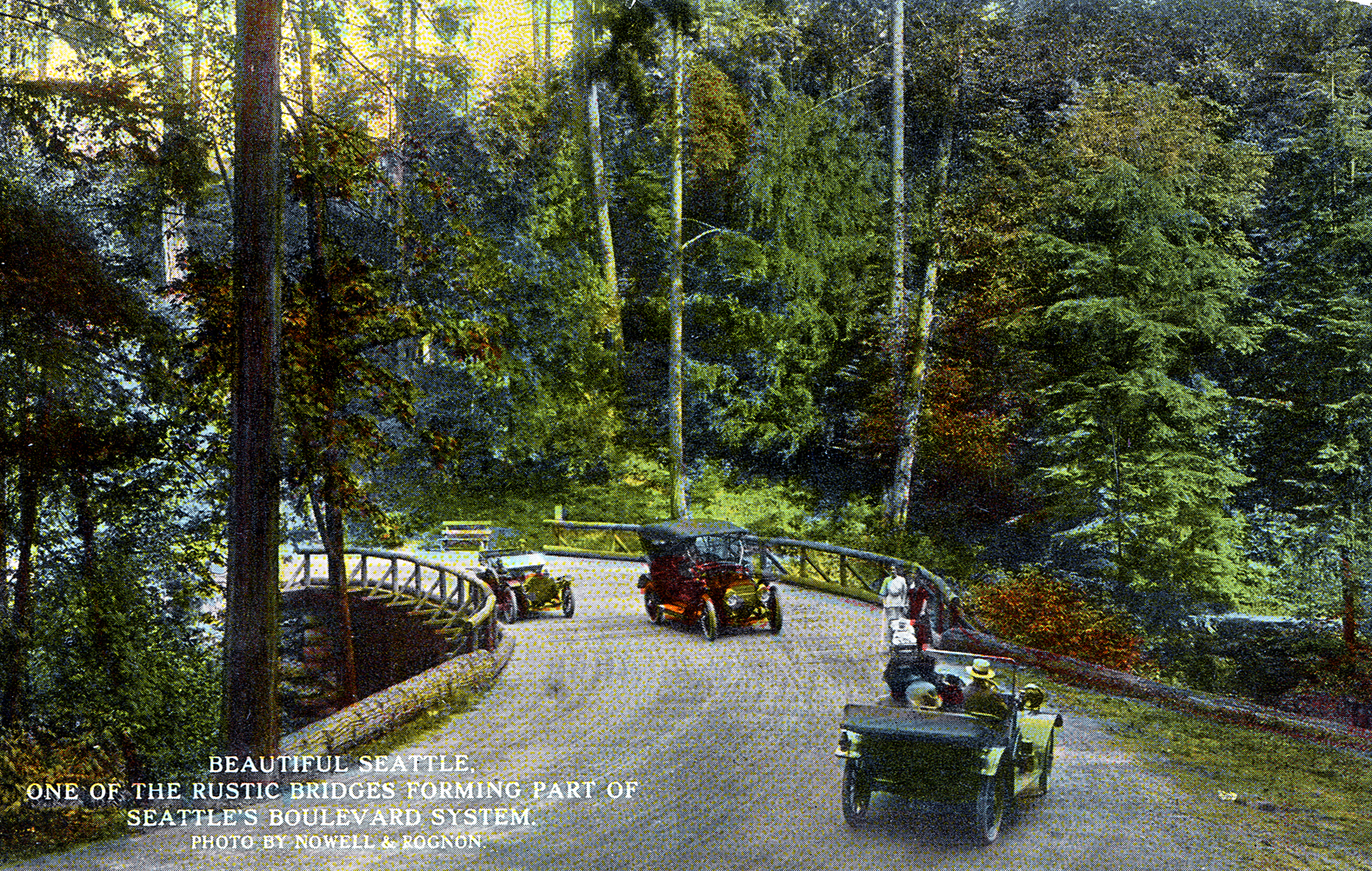
The route of the five-hour drive is not described well in news reports except as a tour of boulevards, commercial areas, and the exposition grounds. Five points are known – they started at the Chamber of Commerce offices in the Central Building at 10:30 a.m., went to Georgetown for lunch, ended the tour at the exposition, took Interlaken Boulevard at some point and were back at the Perry Hotel at 3:30 p.m. The Perry Hotel was located on First Hill at Boren Avenue and Madison Street, so the procession of cars started by gliding down through the business core to Pioneer Square and its totem pole. Heading south out of town was a showcase of Seattle’s ingenuity. First they would pass King Street Station, the tallest building in Seattle. Then the stalled regrade work of Jackson Street, removing the ridge between First Hill and Beacon Hill and pushing the dirt into the Puget Sound to create a new industrial district. A strong impression was left on the visitors. Dick Little wrote a few weeks later, “If Chicago was built with a jack screw, then Seattle was built with a scoop shovel, and the hydraulic sluice, and the work was well done, too.”21
The portal to Georgetown – a young city, founded as a harbor from prohibitionist movements in Seattle – was the massive Seattle Malting and Brewing Company, largest brewery west of the Mississippi.22 They stopped for an “elaborate” luncheon at the palatial home of Seattle Chicago Club member Patrick Francis “Frank” Purcell in the Van Asselt neighborhood south of Georgetown, near The Meadows racetrack.23 From Georgetown to the exposition they may have passed over Beacon Hill, south of the later Jefferson Park to see the reservoir under construction, and driven through bustling Columbia to Mt. Baker and the start of the string of boulevards leading north along the west shore of Lake Washington. It would have been a showcase of Seattle’s efforts to make a more beautiful city with refreshing parks. The fair lay just to the north of Washington Park, connected by pleasant lanes. From the exposition site to downtown they may have gone back through Washington Park, up Interlaken Boulevard, through Volunteer Park, and passed mansions and businesses of Capitol Hill. Dick Little related his impression to a Seattle Times reporter that evening. “Your parks and boulevards have [Chicago] beaten to death. That Interlaken Boulevard of yours is one of the prettiest rides I have ever taken and the water – haven’t you anything else here but beautiful stretches of water?”24
After the tour of Seattle, delegation members were left back at the Perry Hotel. They split in small groups, visiting friends of friends. The newspaper men joined members of the Seattle Press Club for a taxicab ride back to the exposition grounds for a tour and a visit to the printing press of the AYP Daily News. The University of Washington has a photograph titled “Chicago Newspaper men” which was likely taken that evening, June 6.25 Dick Little’s strongest memory of that Sunday in Seattle was getting back to the Perry Hotel from downtown afterwards. The cable car up to First Hill broke down, forcing the group to walk up the steep hill, to which they were wholly unaccustomed. “Seattle was not entirely to the liking of the Chicago visitors. We are a plains people and haven’t the muscular development required to walk about Seattle… [We] blew like porpoises in making the ascent and sat down every half block to rest”26
June 7th: Chicago Day
With the nice weather, a headline on page one of the evening Seattle Daily Times cried out Chicago Day Draws Big Crowd. The Chicago Inter Ocean claimed that attendance broke records that day, but only 15,208 people entered the fair gates, easily the smallest day of the first week and far away from the 90,000 people on opening day.27
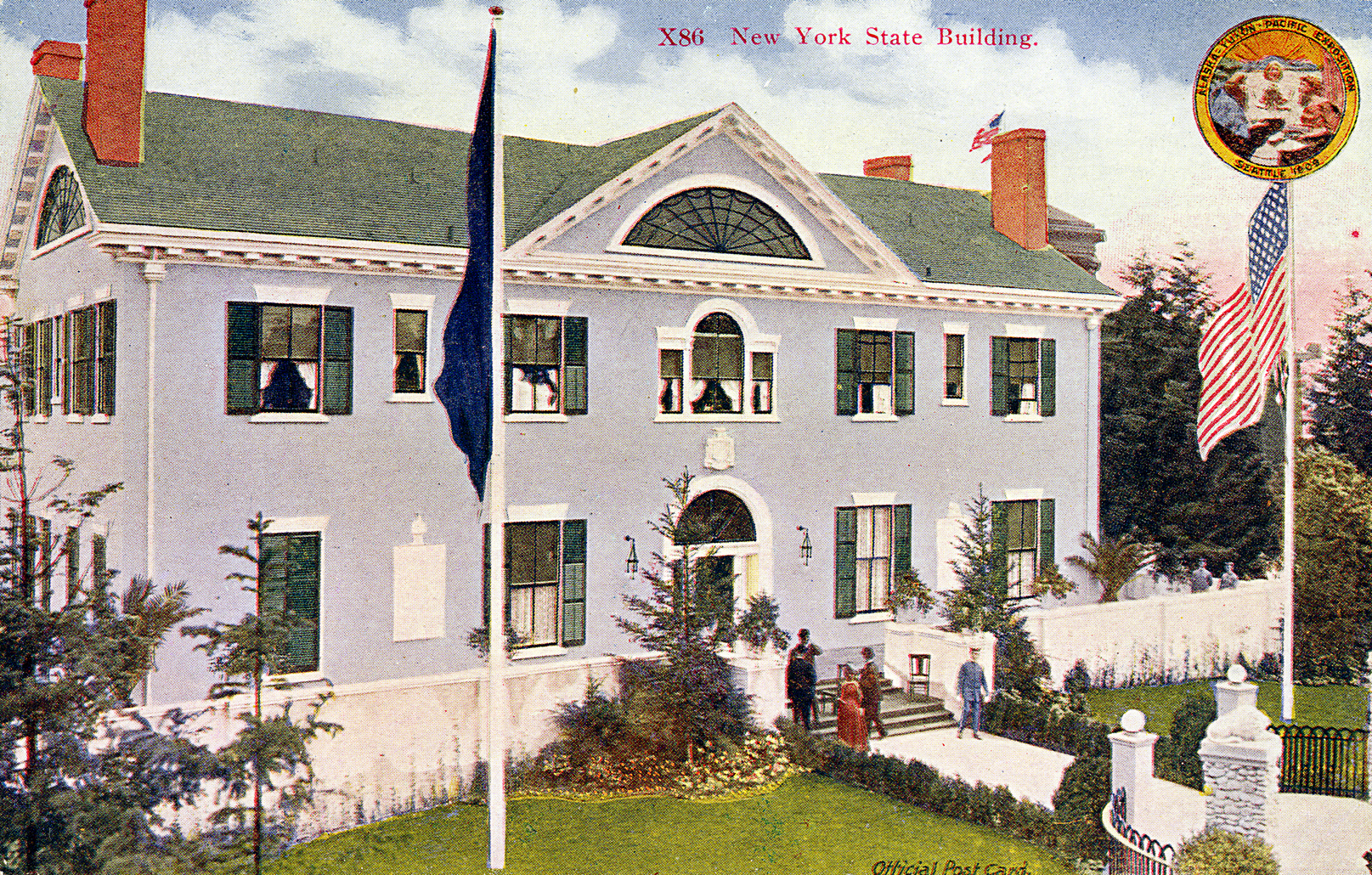
The Association spent the morning of Monday, June 7th meeting with Seattle businessmen, and then they were driven to the fair grounds for luncheon and a tour. Members of the party mentioned with regret that they had been unable to gather support the previous year for a Chicago Building or Illinois State Building at the fair.28 Lunch must have been flavorless after they discovered that the “Seward building,” where they would be hosted for the luncheon, was actually the New York State Building. Chicago and New York had a long-running rivalry for the claim to top city in America, to the extent that the New York Times rarely mentioned Chicago outside of the sports pages. While discussing Chicago Day, articles in the association’s paper Commerce and in the Chicago dailies highlighted the rare failure of Chicago boosterism.29 Dr. Rogers of the New York delegation rubbed salt in their wounds during the luncheon, pointing out that New York was the only state east of the Rockies to purchase space at the exposition.30
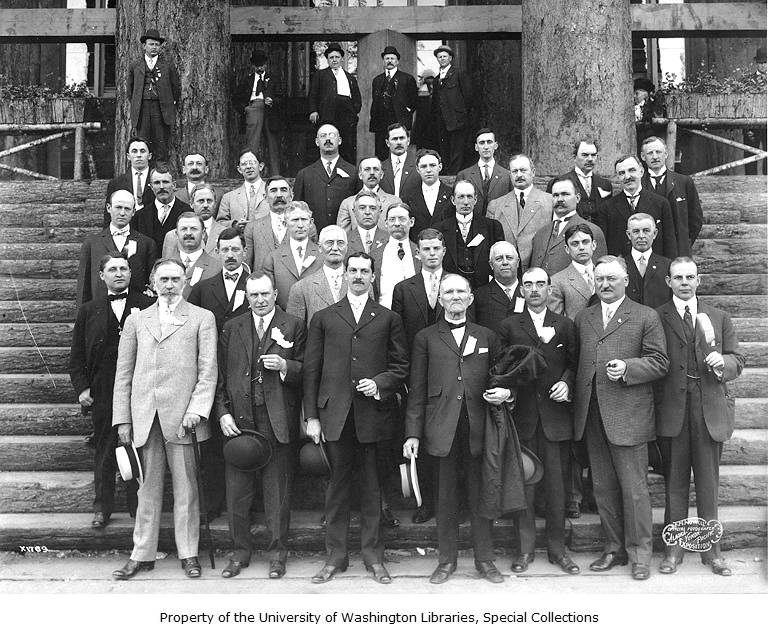
The University of Washington holds a photograph in the Frank Nowell collection of the Chicago Association of Commerce standing as a group on the steps of the Forestry Building.31 Each man stood with a button on their lapel, “Chicago, the Great Central Market”, and a rectangular badge saying “Chicago Association of Commerce Tour” with their name below.32 The library’s caption points out: delegation president Harry Wheeler as the older, spectacled gentleman in the second row; E. D. Stevens, the tall man in front of Wheeler; C.W. Mott two men to his right, with gray hair and a stout figure; and AYP Director General Ira Nadeau in the back row with a moustache. In addition, these men have been found through further research: Dick Little in the back row, third from the left; Dr. Heman Spalding in the middle of the back row; Kay Wood on his own to the right of the back row; Orva G. Williams in the front row, left side; and possibly Professor John Scott to the right one row behind Williams.33 Ignoring the four men in the distance of the photo, there are 36 men pictured, less than the number on the trip. The caption implies that there were several members of the Board of Trade, but perhaps it was only George Stone, Secretary of the Board of Trade who was a member of the delegation. The photo has been assigned the tentative date of June 7th, 1909, but it was definitely taken that afternoon. Likely they stepped from the neighboring New York State Building after finishing lunch to get the often seen group shot on the steps of the Forestry Building.34
After lunch, the group toured buildings, exhibits and the Pay Streak, AYP’s mile-long fun zone and equivalent to the Midway. Dick Little later complimented the fairgrounds themselves in particular, saying “No exposition was ever more prettily set. The buildings are under great pine trees, and everywhere are beds of gorgeous flowers and bowers of roses and clinging vines.” The buildings, the exhibits, and the entertainment were nothing spectacular to these men, though, as most had contributed to or at least attended the massive, revolutionary Columbian Exposition in Chicago in 1893. Dick Little specifically mentioned the “old friends” at the Streets of Cairo, the House Upside Down, the Japanese village, and the Igorot. These aspects he dismissed as not much different from Chicago’s amusement parks.35
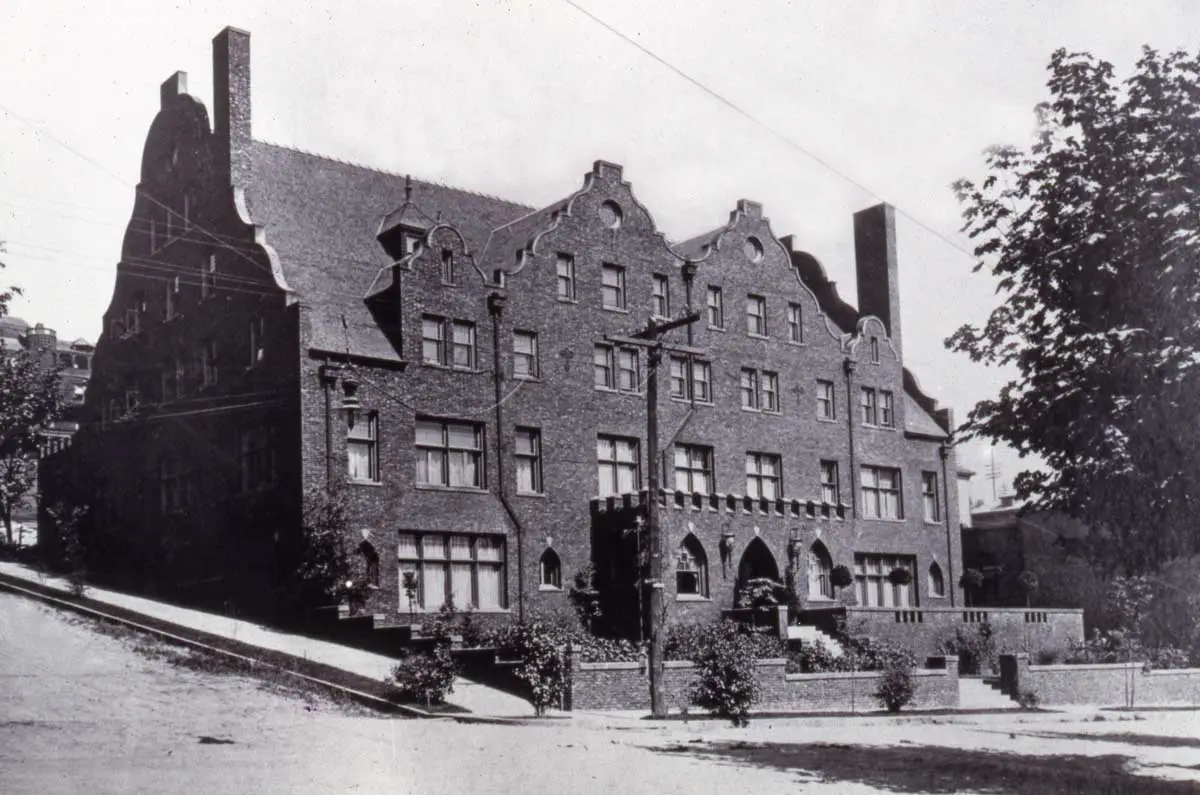
At 7 p.m. a banquet was held at the Rainier Club, hosted by the Seattle Chamber of Commerce. The elite of Seattle mustered energy after an emergency AYP executive meeting to discuss division of responsibilities for visiting dignitaries.36 The Seattle Star described the banquet as “one of the most brilliant functions ever presented in the Rainier club” with beautiful decorations and a series of glowing speeches. Forty Seattleites balanced the forty visitors, including Judge Thomas Burke, Chamber of Commerce president and AYP vice-president John H. McGraw, AYP president J. E. Chilberg, and the visiting Mayor of Milwaukee D. F. Rose. At the conclusion of a number of speeches, the CAC left northbound on their chartered train at 11 p.m.37
On their arrival to Seattle, at both luncheons, and at the Rainier Club banquet, there were opportunities for speeches by association members, and many are quoted extensively in newspapers (see Table 2: List of Quoted Speeches in Seattle below). Vojta F. Mashek described how Chicago’s primary source of lumber was from the South, which was recognized as a dwindling resource. The Pacific Northwest was expected to soon become the supplier for the manufacturing tributaries of the Great Central Market.38 Wheeler and others described how Seattle’s harbor, resources, and railroads ensured prosperity. They believed that rivers falling from the Cascades represented vast electrical power potential for manufacturing plants, which expand America’s trade with Asia.39
There was certainly a self-serving core purpose to the delegation. A June 5th speech by delegation president Harry Wheeler put AYP in terms of “an exposition by one live city solely in the interests of a part of its distributing territory.” He explained that the resulting prosperity would be greater in Seattle than those territories, a wholesome selfishness benefitting all. This was a projection of the CAC worldview, where they saw every city in America feeding into the economic marvel of Chicago. Wheeler’s June 7th speech at the Rainier Club suggested that Seattle and Chicago should work together to make sure that Asian trade travelled through the west coast to Chicago and then to the east coast, hoping to gain allies in an economic struggle against effects of the looming Panama Canal.
The Association apparently had two goals in their excursion: creating opportunity for Chicago businesses and moreover improving the overall national business climate by connecting commercial clubs together. As a Seattle reporter put it, the exposition itself was “merely the excuse.”40 First, they aimed to boost Chicago as the heart of commerce in America. Later in the summer a CAC member was asked for his opinion about another city’s boasting:
“Chicago would never have been what she is today if it hadn’t been for her ‘boosters,’ who always were on the lookout for means to advertise the city. Nothing was too expensive, no plan too elaborate, time and money not an object to the hustlers there when Chicago could have her advantages told to the rest of the country and to the world.”41
His statement perfectly captured the primary reason for a pricey $15,000 trip across the west. They would take their message to every commercial group in every two-bit town, treat them as equals or betters, and invite them to come see the miracle of Chicago personally.
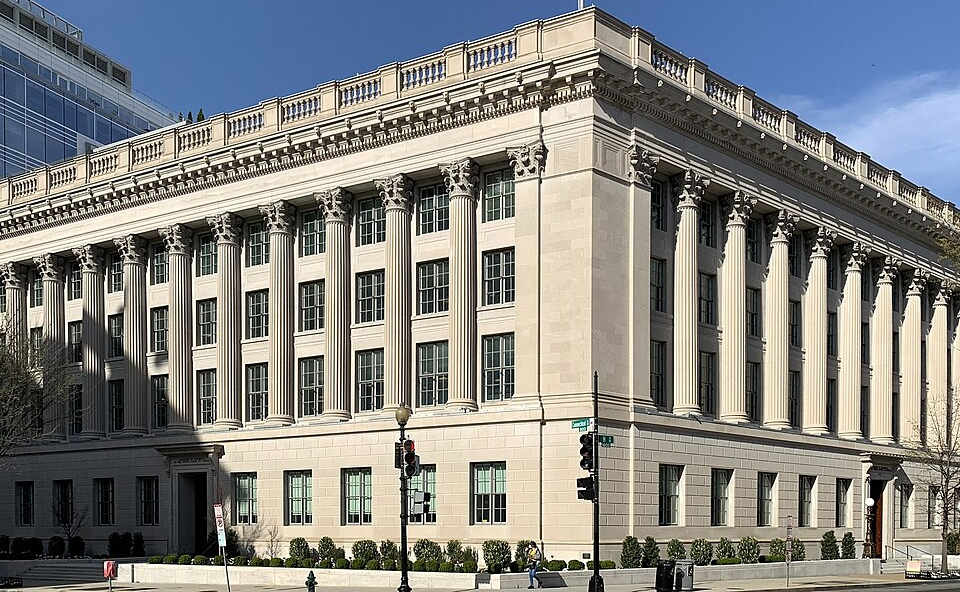

In creating direct ties with every respectable city in the west, the Association prepared itself for a much larger role in American business. After he stepped off the train back in Chicago, member Eugene Kimbark spoke of his realization of the need for a national commercial organization. CAC Vice-President Harry Wheeler mentioned the idea as well. It warranted two sub-headings in the Inter-Ocean, including “League of Business Bodies May Become Nation Wide.” Kimbark said that the association had been “nurs[ing] the idea quietly for more than a year” and had discussed it with each city visited on the trip, all of which were in support.42
CAC had been working Congress and President Roosevelt on tariff and other business issues, and began wooing both candidates in the 1908 presidential election.43 As a result, President William Taft petitioned Congress in 1912 on the need for a national business group, and asked his Bureau of Manufacturers to call the convention that formed the United States Chamber of Commerce. The President gave the keynote laying out the need to connect the commercial clubs of the country.44 At that convention, Harry Wheeler was elected first president of the United States Chamber of Commerce. A strong argument can be made that the visit of the association to the Alaska Yukon Pacific Exposition – and by extension, the exposition itself – was the catalyst for the creation of America’s first truly national commercial organization.45
Back to Chicago
The oddest thing about the Association’s trip to the AYP was that they barely saw it. Only a handful of hours were spent on the grounds, although they were on the road for 17 days visiting major commerce centers of the West and Northwest. In all, their excursion took them over 6,000 miles of rail, 3,000 miles of road in automobiles, and included at least 200 speeches at 60 banquets.46 The CAC visited 40 cities in 18 days, a combination of pleasure excursion and trade delegation with the slogan “I Will.”47 They alternated back and forth between the Great
Northern and Northern Pacific railroad tracks on the way to Seattle, and rode Oregon Railroad and Navigation Company, Oregon Short Line, Union Pacific, and Chicago and Northwestern Railway lines home. This allowed them to visit the major trade centers of North Dakota, Montana, Idaho, Washington, Oregon, Utah, Wyoming, Colorado, and Nebraska.48
During their two-day stay in Seattle, the association was treated well, but not exceptionally so. Governor Hay met with them briefly in Ellensburg, on their way to Seattle, apparently too busy to play host throughout their visit.49 At their big AYP luncheon they were forced to share the table with 23 passenger agents from the Southern Pacific Railroad.50 The agents would recommend travel destinations to ticket buyers, so they were important to Seattle and the AYP. But to the Association delegates they must have been odd company for lunch, even if the Southern Pacific was part of E. H. Harriman’s railroad empire and friendly to Chicago.
In other cities they were often treated like kings. Through North Dakota, Montana, and Idaho, the governor of each state met them at the border and rode with them to the opposite border.51 They were greeted by marching bands in many cities. In Bozeman they were met by the only women’s band in Montana. They then sat at a banquet for 100 with a bouquet of geraniums at each plate. An orchestra played and “waitresses, in uniform, marched into the room and at signals from the head waitress performed functions of the banquet in a very military like manner. It is doubtful whether a better drilled corps of waitresses can be found in the west.”52 Commercial groups veritably tripped over themselves trying to make ever minute in their city the best of the trip.
Some of the excitement was more directly commerce-oriented. The train headed to Bellingham after Seattle. Met by an array of local leaders, they were taken by boat to see a fish trap. Simply a net hung between four sixty-five foot piles, they were told that the trap was as good as a staked gold claim. The net was raised to reveal 150 large spring salmon, and two unlucky seals. Three members of the party leaned over the rails to photograph the undulating mass of fish, almost falling over. To their surprise, a guard quickly shot the two seal bandits. The party was escorted to the Pacific American Fisheries plant to watch salmon being cleaned by Chinese workers and canned for shipment, perhaps remembering PAF’s Iron Chink which they had seen on display at the exposition.53
The delegation had a great visit to Portland during the Rose Festival, some seeing old business relations and friends made during the Lewis & Clark Exposition.54 They made rapid progress across Oregon, Idaho, Utah, Colorado, and Montana. At one stop in Oregon, the only real mishap of the trip occurred. The train stopped at Athena and the association was driven by automobile to Pendleton. One auto was late, and members Kay Wood and Charles Seeger finally caught up with the train far down the old Oregon Trail in Baker City.55 Otherwise, the delegation managed to just barely avoid disaster. A cyclone hit Fargo, North Dakota the day before they arrived, and a railroad bridge washed out five minutes behind them near Bozeman, Montana. Flash floods hit Spokane just after they left, and sudden rains hit the AYP on its second day, causing stampedes and mass confusion.56
From Seattle’s perspective, Chicago Association of Commerce Day was never really intended as a great celebration, but instead as a simple chance to connect with visiting dignitaries. The Seattle Times on June 6th led off with an article about their arrival, pleading with Seattleites to make a good impression on the first group of big-time guests of the fair:
“Its personnel may be taken as a criterion of those which are to follow from other cities and at other seasons of the year. Taking the fact that this excursion is only one of many of a similar nature, it will behoove us all to keep our collars clean, our faces washed and our Sunday manners well anchored to our persons throughout most of the Summer.”57
Clearly, Seattle hoped to make a good impression. But there was none of the kowtowing to the businessmen and outright begging for investment as the commercial clubs of other cities had done to the association. Josiah Collins, AYP director of ceremonies, said it this way, “The ancestor of the Seattle spirit was a Chicago hustler.”58 Seattle was perhaps descendent, but not dependent upon Chicago.
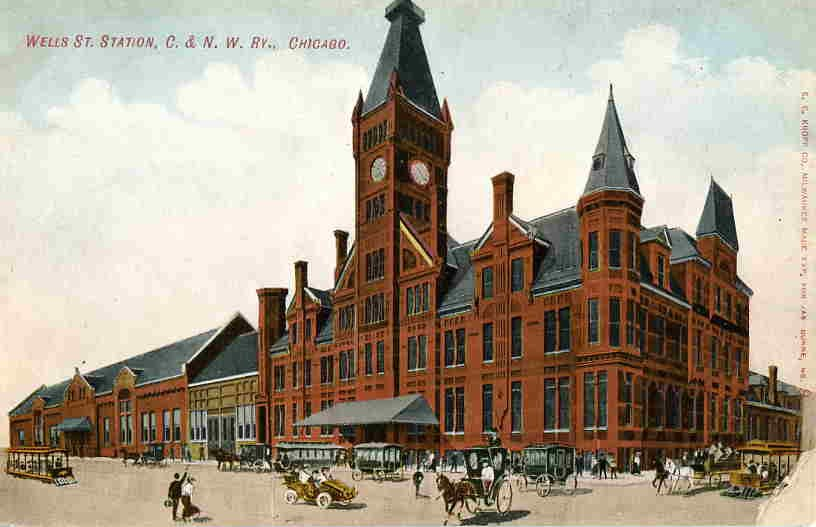

The Association of Commerce returned to Chicago on June 17th, after a sleepless night of “stunts” on the train with eight other CAC members who met them in Omaha, Nebraska. They arrived in good spirits at Chicago & Northwestern’s Wells Street Station, greeted by their wives, family, friends, and 100 members of the Association. According to the Inter Ocean, “A cheer went up that resounded through the station when the victorious invaders of the Western states stepped once more on Chicago soil.”59 A reproduction of the association’s seal, made entirely of carnations and roses was on display, and each returning man was given a cigar with Chicago’s slogan, “I Will.”60 They were glad to be home, and Chicago was glad to have them.
Dick Little’s sarcastic article two weeks later summed up his feelings on the Northwest through a fanciful conversation with a down-and-out, former Chicagoan in Tacoma. The man had planned an elaborate response to the Northwest’s boosterism, which he had fallen for hook, line, and sinker. “And then as I take the first train in the evening that’s headed for little old Chicago I’ll see my sign shining white and bright through the darkness, and my sign will say: ‘To —- with Tacoma.'”61 It’s odd that a man from Chicago – the city always looking for a way to advertise itself – was overwhelmed by the raw energy of the Puget Sound.
Dick Little, Harry Wheeler, and the members of the Chicago Association of Commerce enjoyed themselves due to the effort of their hosts including the Seattle Chicago Club and exposition officials. More importantly, they led a successful mission of commercial goodwill across the Pacific Northwest, booming their message of Chicago as The Great Central Market and attracting potential members of a future national organization of commercial groups.
Tables
Table 1: Seattle Chicago Club members, known62
| Name | Seattle Chicago Club Note | Other Notes |
|---|---|---|
| Captain E. W. Johnson | Chairman, Plans Committee | |
| Louis W. Buckley | Plans Committee | AYP Director of Special Events |
| R. Grant | Plans Committee | |
| Philip A. Baillargeon | Plans Committee | Seattle contractor. Eight children all born in Illinois. Brother of Joseph A. Baillargeon. |
| O. H. Anderson | Plans Committee | |
| Ira P. Rawley | Plans Committee | |
| H. E. Case | Plans Committee | |
| L. Brinkerhoff | Plans Committee | |
| J. T. Yokum | Plans Committee | Perhaps John F. Yokum, visiting Chicago banker. |
| Charles H. Roberts | Plans Committee | |
| M. S. Anderson | Plans Committee | |
| Frances M. Larned | President | |
| A. L. Morris | Joined May 10 | |
| Elmer E. Peck | Joined May 10 | |
| B. Frank Purcell | Joined May 10 | Hosted luncheon on June 6. Formerly of Chicago. |
| W. B. Cole | Joined May 10 | |
| A. E. Freed | Joined May 10 | |
| George O. Kretzinger | Joined May 10 | Born in Illinois. Salesman. |
| J. P. Scollerup | Joined May 10 | |
| Edward D. Cowen | Joined May 10 | |
| Dr. A. W. Hawley | Joined May 10 | |
| J. J. McAvoy | Joined May 10 | |
| Louis C. Houghton | Joined May 10 | |
| D. C. McPherson | Joined May 10 | |
| Everett Rech | Joined May 10 | |
| Herbert E. Newell | Joined May 10 | Wife born in Illinois. |
| H. F. Conly | Joined May 10 | |
| C. A. Dean | Joined May 10 | |
| Frank Jobson | Joined May 10 | |
| Harry Bruskevith | Joined May 10 | Born in Chicago. Seattle City Council 1913-1914. |
| Edward Judd | Joined May 10 | Born in Illinois. Lawyer. |
| Thomas Kleinogel | Joined May 10 | Wife born in Illinois. Merchant. |
| C. K. Stewart | Joined May 10 | |
| O. Barnett | ||
| H. Moffatt | ||
| C. H. Roberts | ||
| G. O. Guy |
Table 2: List of quoted speeches in Seattle63
| Date and Time of Speech | Speaker | Location of Speech |
|---|---|---|
| June 5, afternoon | Governor Hay | Ellensburg |
| June 5, after 9pm | Harry Wheeler | Perry Hotel |
| June 5, after 9pm | V. F. Mashek | Perry Hotel |
| June 6 | Harry Wheeler | Home of Frank Purcell? |
| June 6 | Hugo DuBrock | Home of Frank Purcell? |
| June 6 | Prof. John Scott | Home of Frank Purcell? |
| June 6 | C. W. Mott, NP RR | Home of Frank Purcell? |
| June 7, luncheon | Harry Wheeler | New York State Building |
| June 7, luncheon | Josiah Collins, AYP committee on ceremonies | New York State Building |
| June 7, luncheon | Dr. H. J. Rogers, New York commission | New York State Building |
| June 7, luncheon | Charles S. Fee, Southern Pacific RR | New York State Building |
| June 7, luncheon | C. W. Mott, Northern Pacific RR | New York State Building |
| June 7, banquet | Harry Wheeler | Rainier Club |
| June 7, banquet | Mayor David S. Rose of Milwaukee | Rainier Club |
| June 7, banquet | C. W. Mott | Rainier Club |
| Unspecified | Harry Wheeler | Seattle, unspecified |
Table 3: Information on CAC delegation members64
| Name | Employer | Line of Business | Notes |
|---|---|---|---|
| E. R. Blanchard | W. W. Kimball Company | Pianos and organs | Not mentioned in Salt Lake or Commerce. Mentioned in Seattle |
| Frederick Budinger | Keith Bros & Co | Hats and caps | |
| Frank W. Carson | Chicago Tribune | Newspaper | |
| Robert R. Clarke | Inter Ocean | Not in Commerce list, but on trip [alt: Clarks, E., A.] | |
| Edward Clifford | Hornblower & Weeks | Bankers and brokers | Vice-chairman of trade delegation |
| Emile M. Despres | Despres, Bridges & Noel | Wholesale jewelry | |
| George J. Dowling | The Cable Company | Pianos and organs | Sales Manager at Cable. |
| Hugo Dubrock | Hugo Du Brock & Co | Shirtwaist suit manufacturers | [alt: DeBrock, De Bruck, De Brock, Du Brock] |
| Roswell Martin Field | Chicago Examiner | Newspaper | |
| J. C. Harding | Springfield F & M Insurance company | Insurance | |
| John M. Hart | John M Hart Company | Hardware factory products | |
| Hugo Hartmann | Hartmann Trunk company | Trunks and traveling bags | [alt: Hugh, Hartman] |
| Thomas H. Hurlbert | n/a | Real estate and builder | |
| C. N. Kimball | W. W. Kimball company | Pianos and organs | |
| Eugene U. Kimbark | Paper Mills company | Paper manufacturers | Treasurer, CAC |
| Philip H. Kinsley | Associated Press | Newspaper | |
| Richard Henry “Dick” Little | Chicago Record-Herald | Newspaper | [alt: S.] |
| F. L. Macomber | Hibbard-Spencer, Barlett & Co | Hardware | |
| John P. Mann | Morris, Mann & Reilly | Dry goods specialties | Chairman of CAC Ways & Means Committee |
| Vojta Frank Mashek | Pillsen Lumber Company | Lumber | Vice President of Pillsen [alt: Maschek] [alt: Pilsen] |
| John McCarthy | Charles Hathaway & Co | Commercial paper | |
| Robert McDougal | Knight & McDougal | Not on Commerce list | |
| Hubert F. Miller | Chicago Association of Commerce | Editor of Commerce and Great Central Market | |
| C. W. Mott | Northern Pacific RR | Immigration Agent. Left party at Tacoma | |
| James O'Shaughenessy | Gundlach Advertising Company | Advertising | |
| Percival B. Palmer | Percival Palmer & Co | Cloaks and suits | |
| George G. Powers | Union Wire Mattress company | Furniture | |
| Frederick H. Rawson | Union Trust Company | Banker | Joined party at Spokane |
| George T Roble | Excelsior Auto Supply Company | Supplies for automobile manufacturers, dealers and owners | President of Excelsior [alt: Robey] |
| Neil Satterlee | Chicago Opera House | Official stenographer | |
| Prof. John Adams Scott | Northwestern University | Greek studies professor | [alt: W.] |
| Robert L. Scott | Carson, Pirie, Scott & Co | Dry goods | |
| Charles Seegers | American Varnish Company | Paints and varnish manufacturer | President of American Varnish |
| Edwin Sherman | Guthmann, Carpenter & Telling | Boots and shoes | Vice-President and Treasurer of GCT |
| Dr. Heman Spalding | Chicago health department | ||
| E. D. Stevens | American Silk Company | Silks and satins | |
| George F. Stone | Chicago Board of Trade | Secretary of Board of Trade | |
| Edward J. Stransky | Kuh, Nathan & Fischer company | Clothing | Secretary of KNF [alt: Kun] |
| Harry A. Wheeler | Credit Clearing House | Chairman/President of delegation. Left party in Idaho for Chicago. President CCH. [alt: H. H.] | |
| Orva G. Williams | O G Williams Manufacturing Company | Advertising novelties | |
| Kay Wood | Wood Brothers | Live stock commission | Union stock yards |
End Notes
- The change from “Chicago Day” to “Chicago Association of Commerce Day” is documented in Program of special days, definitely decided, (Seattle?: Alaska-Yukon-Pacific Exposition?, 1909), and also Corrections and Additions: program of special days, since May 1st, 1909, (Seattle?: Alaska-Yukon-Pacific Exposition?, 1909). Details on the association from: Chicago Association of Commerce, Just a word about what The Chicago Association of Commerce has done and is doing (Chicago: Membership Committee, 1908). ↩︎
- “Chicago Business Men Come for a Look at Seattle,” Seattle Post-Intelligencer, 6 June 1909, 1, and also “‘Boomers’ Off in 7 Coaches,” Chicago Daily Tribune, 31 May, 1909, 16. Comments on “You’ll Like Tacoma” in Richard Henry Little, “The Cities of the West as Viewed by a Chicagoan,” Everett Daily Herald, 26 June 1909, 5. It’s unclear whether they really went through the AYP after going over Stevens Pass on Great Northern tracks, or instead came over Stampede Pass and actually passed through Tacoma on the Northern Pacific tracks. Either way they would have seen the Tacoma sign, the “longest electric sign in the world” in Union Bay. And they would have been even more perplexed had they arrived a few days later. A prankster cut the wires to some of the letters, spelling out “You’ll Like Ma.” See “He Should Be Arrested,” Argus, 12 June 1909, 4. ↩︎
- The purpose and rules of the trip are explained in “’Boosters’ Speeding Through the West,” Chicago Inter Ocean, 3 June 1909, 7. A comparison to the Rotary Club is warranted. Rotary and the Association of Commerce responded to the same need for organization in the whirlwind business world of Chicago. Rotary began a year after the association in 1905. Like the association’s delegations, Rotary drew one man from each profession. Contrary to their current mission of “doing good in the world,” Rotary in its very early years was meant simply to improve each man’s business, while the Association always felt that a better city and country meant better business and was thereby involved in civic activity. Connections between the two groups are tantalizing but apparently unexplored. The Seattle excursion president Harry Wheeler was good friends with Rotary founder Paul Harris, who himself was a member of CAC. Chicago Rotary Club’s first major action, creating comfort stations in Chicago, was done in partnership with CAC. The Seattle Rotary Club held their first meeting the week after CAC’s visit in 1909. It was at the Orpheum Café, the same location that the Seattle Chicago Club (discussed later) met. Further study may reveal close ties between Rotary and CAC. See Rotary Club of Seattle, Seattle Rotary: The First Eighty Years 1909-1989 (Seattle: Rotary Club of Seattle, 1989), and also Paul Harris, “Nationalization,” Messages from the President, May 1912, and also Paul Harris, The Founder of Rotary (Chicago: Rotary International, 1928), 118, and also Thomas Derdak, “Rotary International“. Some of the men belonged to the “second generation” of Chicago, and were heirs to the businesses and city that their parents created. Frederick Rawson, for example, took over the Union Trust Company from his father. Many others used the opportunity of university education to launch successful careers. For example, Vojta Mashek graduated from Cornell in 1889 and immediately formed Mashek Lumber Company and Pilsen Lumber Company, named after Plzen in the Czech lands of his father’s native Austria-Hungary. See, J. Seymour Currey, Chicago, It’s History and Builders (Chicago: University of Illinois, 1912), 387, and also Daniel Droba, Czech and Slovak Leaders in Metropolitan Chicago (Chicago: University of Chicago, 1934), 58. ↩︎
- For information on Dr. Spalding see Lowell Public Library, “Dr. Heman Spalding“. It’s interesting that at least one expert on communicable diseases was present at the fair. Seattle suffered an outbreak of typhoid towards the end of the fair, caused by sewage mixed with drinking water. Perhaps if Dr. Spalding had visited later, lives could have been saved. For details of the typhoid outbreak see “Health officials report outbreak of typhoid in Seattle on September 12, 1909“, HistoryLink, 8 June 2008. Google Books has full copies of John Adams Scott’s The Unity of Homer and A Comparative Study of Hesiod and Pindar, as well as a number of journal articles. ↩︎
- “Boomers Shine in Spokane,” Chicago Daily Tribune, 5 June 1909, 2. At a stop on a CAC trip to Kentucky the previous November, Professor Nathaniel Butler from the University of Chicago toured a library, women’s club, and high school to gauge local facilities. Perhaps Scott and Spalding served a similar role. “Chicago Business Men Are Commercial Club Guests,” Paducah Evening Sun (Kentucky) 9 November 1908, 1, 4. ↩︎
- “Richard Henry Little,” The Scroll of Phi Delta Theta 28 (1904): 430-432, and also “A Reporter’s Honest Opinion,” Seattle Daily Times, 8 June 1909, 6. ↩︎
- Google Books has full copies of Roswell Martin Field’s: Little Miss Dee; Madeline; The Muses Up to Date; The Passing of Mother’s Portrait; In Sunflower Land; The Bondage of Ballinger; and many more. Google Books also has full copies of joint works between Roswell and his brother Eugene Field, best known as a children’s book author. More information about Eugene Field and the Field family can be found at The Eugene Field House & St. Louis Toy Museum. ↩︎
- “Frank Carson, 60, of Daily News, Dies,” New York Times, 20 March 1941, 21. ↩︎
- “Officer on Trial for Assault”, The Quincy Daily Whig, 28 December 1906, 2. ↩︎
- “Philip Kinsley, Famed Tribune Reporter, Dies,” Chicago Tribune. 21 May 1960, 4:14, and also “Philip Kinsley, 79, Dies,” New York Times, 22 May 1960, 86. Information about Miller can be found in, “Chicago Men to Visit Fair,” Seattle Daily Times, 6 June 1909, 13. ↩︎
- Original copies of the tabloid newsletter do not survive, but thankfully excerpts of the Daily Grind were included in Chicago Commerce and the Seattle Post-Intelligencer. Three articles, including a spoof on miracle cure ads, society pages and the quoted spoof on Seattle appear in “Chicago Visitors Motor Over City.” A large variety of articles including society spoofs, an advice column, several short verses, and a faked telegram from the Mayor of Chicago complaining that Chicago was lost without them in “Notes on Association’s Trade Delegation Tour to the Pacific,” Chicago Commerce, 14 June 1909, 16-18. These newsletters apparently were a tradition. For example, the 1910 boat excursion on Lakes Michigan and Superior to Wisconsin, Michigan, Minnesota, Indiana and Illinois featured a newsletter “The Daily Log.” Newsmen from the AP, Chicago Record-Herald, and Chicago American attended that trip. See “The City Pleases,” The Daily Press (Sheboygan), 24 June 1910, 1. ↩︎
- “Chicago Visitors Motor Over City.” ↩︎
- “Notes on Association’s Trade Delegation Tour to the Pacific.” ↩︎
- Originally run in the Chicago Record-Herald, the humor piece was reprinted as “The Cities of the West as Viewed by a Chicagoan.” The gist of Little’s essay matches newspaper accounts of events at stops in Washington and Oregon, for example “Chicago Boomers See Salmon Pots”, Chicago Daily Tribune, 9 June 1909, 6, and also “Chicagoans at Rose Pageant,” Chicago Record-Herald, 11 June 1909, 2, and also “Showers of Roses Fall on Boomers”, Chicago Daily Tribune, June 11, 1909, 9, and also “Visitors to See Fish Trap” Morning Reveille (Bellingham), 8 June 1909, 6. Everett leaders were apparently most upset about the unrefined speech attributed to them. For example, “It hain’t as big as we wanted to have; just a smallish sort of a log, what we call an Everett toothpick, the same being eight feet an’ four inches in diameter.” A week after reprinting the essay, the Everett Herald ran a front-page story about the anger it had raised, “Newspaper Story is Resented,” Everett Daily Herald, 3 July 1909, 1. Other local papers thought the Everett reaction was excessive and silly, for example “Northwest Press” Olympia Record (reprinted from Tacoma Ledger), 7 July 1909, 2; and also “[No title],” Bellingham Herald, 5 July 1909, 4. The Chicago Association of Commerce dispatched Business Manager Walter Moody, their public relations guru, to Spokane to offer an apology. See for example, “Comes to Apologize for Chicago News Article,” Olympia Record, 22 July 1909, 2, and also “Chicago’s Handsome Apology to Northwest,” Olympia Record, 22 July 1909, 2, and also “[No title],” Bellingham Herald, 22 July 1909, 4. More fun was apparently made by Chicago at the Northwest’s expense, as Everett was again the butt of a joke mentioned in “[No title],” Bellingham Herald, 17 June 1909, 5. In her paper “Snohomish County at the A-Y-P,” presented at the 2009 Pacific Northwest Historians Guild conference, Melinda Van Wingen described the hopeful hosting and later anger of Everett’s commercial and government leaders. ↩︎
- “Long Trip Enjoyed by Officers,” Seattle Post-Intelligencer, 6 June 1909, 20. ↩︎
- “Chicago Visitors Motor Over City,” and also “Boomers See Expo; Their Day Today,” Chicago Daily Tribune, 7 June 1909, 6. ↩︎
- “Plans on Foot for Chicago Day at Fair,” Seattle Post-Intelligencer, 27 April 1909, 2. ↩︎
- Philip Baillargeon was a Seattle contractor who had just completed his mansion at 812 East Shelby Street. An ad for Baillargeon’s contracting business can be found on page 120 of Seattle Department of Buildings, Building Ordinances: City of Seattle, Official Edition 1910 (Seattle: The City, 1910). The 1910 census gives the address for Philip and family, and viewing the property report in the King County website at shows the construction year as 1909, with a “9- Better” building grade, not an average home. It most recently sold for almost a million dollars. ↩︎
- “Plans on Foot for Chicago Day at Fair,” and also “Chicago Club Will Welcome Visitors,” Seattle Post-Intelligencer, 11 May 1909, 4. It’s unclear whether AYP sold naming rights for days or welcomed them as drivers of ticket sales. The funds raised more likely covered the costs of the banquet at the Rainier Club and the luncheon on the 6th. CAC ate on their hosts’ dime, as seen in “Newspaper Story is Resented.” ↩︎
- “Chicago Day Draws Big Crowd,” Seattle Daily Times, 7 June 1909, 1, 2, and also “Chicago Club Will Welcome Visitors.” ↩︎
- The ride is described in “Chicago Visitors Motor Over City,” Seattle Post-Intelligencer, 7 June 1909, 3, and also “A Reporter’s Honest Opinion,” and also “Chicago Men Seeing A-Y-P,” The A.-Y.-P. Daily News, 7 June 1909, 1. Quote from “Cities of the West as Viewed by a Chicagoan.” In the 1860s, George Pullman raised the height of Chicago by using jackscrews to lift the buildings and construct basements below. This was viewed as the first sign of Chicago’s ingenuity. See for example, “George M. Pullman; How He Raised Chicago Buildings on Stilts–His First Palace Car,” New York Times, 11 July 1887, 6. ↩︎
- Paul Dorpat, “Now & Then – Rainier Brewery”. ↩︎
- “Chicago Men Seeing A-Y-P,” and also “Chicago Day at Seattle Fair,” Chicago Record-Herald, 8 June 1909, 3. A biography of Patrick Francis “Frank” Purcell can be found in Clarence Bagley, History of Seattle from Earliest Settlement to the Present Time, (Chicago: S. J. Clarke Pub. Co, 1916), 342-3. The details of his life are certainly incomplete and perhaps some are incorrect. Although the biography states he arrived in Seattle in 1902 to form his Purcell Safe Company, the company is described as newly incorporated in “More New Companies,” Morning Olympian, 1 March 1906, 2. Several articles just after his scandalous marriage to Martha May (Triplett) Van de Vanter – the new widow of former state senator Arthur T. Van de Vanter – in January 1908 provide other information. His ten-year common-law wife sued and gave their story in “Frank Purcell Sued for Divorce,” Oregonian, 21 February 1908, 7. She claimed that they lived together in Chicago where he operated the Kentucky Sales Stables, at least from about 1899 to 1904. Another oddity from her story – which matches somewhat with local Oregonian information, is that Purcell was possibly in Chicago for the 1893 Columian Exposition, and then in St. Louis in 1904, Portland in 1905, and Seattle in 1909, seemingly riding a tide of World’s Fairs in the United States. Purcell partnered in a safe and lock company in Portland in 1904, and then partnered in another in Spokane and finally started his own in Seattle. In 1907, Purcell finally formally divorced Mary P. Purcell, the woman with whom he emigrated from Ireland in 1885 at the age of 15, having abandoned her for Ms. Moss. Arthur willed Martha and thereby her second husband Purcell a $300,000 estate, including half ownership in the Tourist Hotel, various real estate holdings, and a large home in Seattle’s Van Asselt neighborhood. See “Hastens from Bier to Alter,” Olympia Record, 8 February 1908, p1. This neighborhood was on the current site of Boeing Field, near The Meadows racetrack, as in David Wilma, “Georgetown, Thumbnail History,” HistoryLink.org, . The CAC luncheon location is listed as Purcell’s home near The Meadows in “Chicago Men Seeing A-Y-P,” and Purcell’s address in the 1912 city directory is The Meadows. Presumably this was the home of his wife from her previous marriage. Beyond hosting the CAC luncheon, Purcell seems to have been an AYP supporter, strengthening his apparent world’s fair connection. Purcell ran ads for his businesses in the AYP guidebook, and purchased 25 shares of AYP stock. See Official guide to the Alaska-Yukon Pacific Exposition, (Seattle: Alaska-Yukon-Pacific Exposition Publishing Company, 1909), 11, and also, Secretary’s report of the Alaska-Yukon-Pacific Exposition, (Seattle: Gateway Print Company, 1909), 72. ↩︎
- Lake Washington Boulevard was christened in 1920. Before that, names varied along different stretches of the lake shore. For example, between Leschi Park and Frink Park was Frink Boulevard, and from Yesler to Madison was Blaine Boulevard. Donald N. Sherwood, Sherwood Park History Files, “Lake Washington Boulevard” (Seattle: Seattle Parks Department). Quote from “A Reporter’s Honest Opinion.” ↩︎
- “Chicago Newspaper Men, Alaska-Yukon-Pacific Exposition, Seattle, Washington, 1909. (AYP386)” Photograph. Frank H. Nowell Alaska Yukon Pacific Exposition Photographs. University of Washington Library. ↩︎
- “The Cities of the West as Viewed by a Chicagoan.” ↩︎
- “Chicago Day Draws Big Crowd,” and also “Remove Japanese Flag From Building,” Chicago Inter Ocean, 8 June 1909, 1. The former lists attendance of 13,645, smaller than the secretary’s official record later reported. Chicago Association of Commerce Day was the fourth smallest day of the exposition. Later in the week, June 10, Washington State College Day and June 11, Yakima Valley Day had smaller attendance. The smallest attendance of any day was September 19th, a Sunday with no special event, at 10,130. See Secretary’s report of the Alaska-Yukon-Pacific Exposition, 22. ↩︎
- The University of Washington holds a Frank Nowell photograph of Harry Wheeler visiting Seattle in 1908 to scout possible sites for an Illinois State Building, “Chicago Association of Commerce and exposition officials, Alaska-Yukon-Pacific Exposition, Seattle, Washington, 1908. (AYP459).” Photograph. Frank H. Nowell Alaska Yukon Pacific Exposition Photographs. University of Washington Library. He refers to the trip in several speeches, though it’s unclear why no such building was constructed or how far plans progressed. Delegation president Harry Wheeler is quoted with regret that there was no Chicago or Illinois Building in “Chicago Men to Boost Exposition,” Seattle Post-Intelligencer, 8 June 1909, 10. This raises the interesting possibility that Chicago Association of Commerce Day was orchestrated by the association as a fall-back plan when support for a building was out of reach. In his paper “Hype, Hoopla and Public Relations: The Selling of the A-Y-P,” presented at the 2009 Pacific Northwest Historian’s Guild Conference, Erik Smith described the troubled economic climate for the AYP, and how inability by the exposition to secure state and federal funding early enough may have scared off exhibitors. The association, for its part, was busy in 1909 wringing cash from members’ wallets to build a new headquarters in Chicago, see for example “Million Dollar Fund Campaign,” Chicago Commerce, 24 May 1909, 11, 36. ↩︎
- The New York State Building was a reproduction of William Seward’s home, and for example is referred to as the Seward building in “Chicago Men Seeing A-Y-P.” The Chicago Daily Tribune’s article “Boomers See Expo; Their Day Today” ran with the sub-heading “Forced to Entertain Guests in New York Building Because Illinois Has None.” The entire trade excursion was described as an attempt to wrestle control of the Pacific Northwest from New York in “Boosters in Seattle Today,” Chicago Daily Tribune, 6 June 1909, 5. ↩︎
- “Chicago Men to Boost Exposition.” ↩︎
- “Chicago Association of Commerce members, Alaska-Yukon-Pacific Exposition, Seattle, Washington, 1909.” Photograph. Frank H. Nowell Alaska Yukon Pacific Exposition Photographs. University of Washington Library. ↩︎
- “Chicago Men See the City,” [Bellingham] Morning Reveille, 9 June 1909, 8. The badges and buttons are among many artifacts of the trip which have not been uncovered. Similar badges were given to host groups, described in “Chicago Men See the City.” A commemorative book created by the Northern Pacific was given to each delegate and sent in advance to the commercial clubs in each city. It is described in many articles, including “Souvenir of Trip to Coast,” New York Tribune, 10 June 1909, 12. In Commerce, the association describes special issues of their magazine The Great Central Market and of Commerce which were distributed to groups and individuals at stops on the trip. A few photographs were preserved in an issue of Commerce (described below with the salmon pots at Bellingham), but there must have been more taken during the trip and perhaps survive. Additionally, the association was careful about contacting the hosting clubs before and after the trip, and more letters like that to Governor Hay mentioned below may be archived. ↩︎
- The men were identified by comparing with the following sources: Dr. Heman Spalding in the website at Lowell Public Library; Kay Wood in DN-0063069, Chicago Daily News negatives collection, Chicago Historical Society; Richard Henry Little in DN-0052692, Chicago Daily News negatives collection, Chicago Historical Society; Orva G. Williams in DN-0007262, Chicago Daily News negatives collection, Chicago Historical Society; Professor Scott in photo in email to the author from Janet Olson, Northwestern University archivist. ↩︎
- “Chicago Day Draws Big Crowd.” ↩︎
- “The Cities of the West as Viewed by a Chicagoan.” ↩︎
- The meeting occurred just before the June 7th luncheon. They were obviously somewhat overwhelmed in the first week, and working to improve the fair as they went. The impromptu meeting covered plans for receiving and entertaining official guests as well as speaking to special train parties and societies visiting in large numbers who weren’t part of the AYP program. Whether anything was said directly by the CAC or not, certainly stories of the trip to Seattle highlighted for officials what they could be doing to delight visitors. See “Chicago Day Draws Big Crowd,” and also “Entertain Chicagoans at the Rainier Club,” Seattle Star, 8 June 1909, 7. ↩︎
- “Entertain Chicagoans at the Rainier Club.” ↩︎
- “Chicago Business Men Come for a Look at Seattle.” The association’s speakers were chosen regionally. For example, livestock rustler Kay Wood spoke at each stop in Montana, while Mashek, of Pilsen Lumber Company, backed up delegation chairman Wheeler in Seattle. ↩︎
- Most of the speeches in Seattle followed the pattern of those at each stop on the trip. They established that the Chicagoans were not in town to sell anything, and that Chicago’s prosperity was dependent on Seattle’s prosperity – and vice-versa of course. The CAC would also parrot back the city’s opportunities based on what they had been shown during automobile tours. As a result, city officials were amazed at their perceptiveness, a trick that worked in Seattle on journalists just as well. See, “A Reporter’s Honest Opinion.” Sometimes the flattery went a bit far. In a June 6th speech, Professor John Adams Scott claimed that students from Washington State outnumbered all others at Northwestern University in Illinois. However, a review of university records shows that Washingtonians were a sliver of Northwestern enrollees. Perhaps the professor was trying to encourage groups of alumni who had congregated in Seattle. The Northwestern University Club of Seattle was formed at some point in 1909, and the club in Spokane formed the year earlier, in 1908. Email to author from Janet Olson, Northwestern University archivist. ↩︎
- “Our Chicago Excursionists.” ↩︎
- “Talked About in Hotel Lobbies,” Washington Post, 6 July 1909, 6. ↩︎
- “‘Trade Evangelists’ Are Welcomed Home,” Chicago Inter Ocean, 18 June 1909, 7. ↩︎
- The Association truly believed that what was good for Chicago was good for the rest of the country, and good for each individual commercial club. In late 1908 members of CAC visited the White House to lobby President Roosevelt on tariff issues affecting all American businessmen – after being laughed away by Congress. Roosevelt explained that he was a lame duck and powerless, but told them to remember that an election was coming. Always non-partisan, they soon after hosted an historic banquet with both candidates, Republican William Taft and Democrat William Bryan. Taft won the election, and the Association’s wooing paid off. Description of the White House visit in Complete Proceedings of the First National Business Congress (Chicago: National Business League of America, 1912), 7. Description of the banquet in “Taft Meets Bryan for Chicago Dinner,” New York Times, 8 October 1908, 1. ↩︎
- Reports of the Department of Commerce and Labor, 1912. (Washington: Government Printing Office, 1913), 75-76. ↩︎
- The growth of the Chicago Association of Commerce and their insistency towards promoting trade with the nation seems to have been a reaction to the 1907 financial panic – the panic which almost doomed the AYP. One focus of the CAC was currency reform. Harry Wheeler, working with the National Board of Trade, was one of a core group of men responsible for the creation of the National Citizens’ League (for a sound banking system), and the CAC as a whole took up the task of assembling men from organizations around the country to form the league. NCL led directly to the Federal Reserve Bank. Many members of the NCL appear to be early US Chamber of Commerce members. See Harry A. Wheeler, “The National Citizens’ League: A Movement for a Sound Banking System,” The ANNALS of the American Academy of Political and Social Science. 1922 (99), 26-29, and also Subcommittee of the Committee on Banking and Currency, Investigation of Financial and Monetary Conditions in the United States (Washington: GPO, 1918) 97-98, and also Louise Drusilla Walker, History of the Chicago Association of Commerce. Dissertation. (Chicago: University of Chicago, 1941), 130. ↩︎
- “Trade Boomers Back from West,” Chicago Daily Tribune, 18 June 1909, 14. ↩︎
- “Trade Boomers Home,” Chicago Record-Herald, 18 June 1909, 13, and also, “Trade Extension Delegation Returns from Great Northwest,” Chicago Commerce, 19 June 1909 11-16, and also “Chicago Men See the City.” ↩︎
- “Trade Excursion to Northwest,” Chicago Commerce, 24 May 1909, 18-26. ↩︎
- Edward M. Skinner, Letter to Governor M. E. Hay of Washington. June 26, 1909. Washington State Archives. ↩︎
- “Chicago Day Draws Big Crowd.” ↩︎
- “Chicago Men to Visit Fair.” ↩︎
- “Bozeman is best,” Republican Courier, 8 June 1909, 1, and also “West Lures Chicago Party,” Chicago Daily Tribune, 3 June 1909, 5. ↩︎
- “Chicago Men See the City.” One of the photos can be found in “Things Seen and Done in Association’s Late Trade Extension Tour to the Northwest,” Chicago Commerce, 16 July 1909, 12. ↩︎
- “Chicago Visitors Loud in Praises,” Oregonian, 10 June 1909, 9. Interestingly, the U.S. Chamber of Commerce’s first Vice-president for the Pacific Slope was businessman J. N. Teal from Portland, Oregon. See Complete Proceedings of the First National Business Congress. Of the cities visited in 1909, only Portland and Tacoma commercial clubs were members of the U.S. Chamber of Commerce in 1912. See “The Nation’s Business,” The Nation’s Business, 2 September 1912, 1. ↩︎
- “Busy Day for Chicagoans,” Idaho Statesman, 12 June 1909, 1. ↩︎
- “West Lures Chicago Party,” and also “Scramble Takes Place Around Terminal,” Seattle Times, 2 June 1909, 1. ↩︎
- “Our Chicago Excursionists,” Seattle Daily Times, 6 June 1909, 6. ↩︎
- “Chicago Men to Boost Exposition.” ↩︎
- “Trade Boomers Home.” Quote from “’Trade Evangelists’ Are Welcomed Home.” ↩︎
- “Trade Boomers Home.” ↩︎
- “The Cities of the West as Viewed by a Chicagoan.” ↩︎
- “Plans on Foot for Chicago Day at Fair,” and also “Chicago Club Will Welcome Visitors.” ↩︎
- Sources for each speech as follows. Hay: “Chicago Business Men Come for a Look at Seattle.” Wheeler (Perry): Ibid, and also “Chicago Men to Visit Fair.” Mashek: “Chicago Business Men Come for a Look at Seattle.” Wheeler (Purcell), Dubrock, Scott, Mott (Purcell) “Chicago Visitors Motor Over City.” Wheeler (New York State Building): “Chicago Lauds Her Pacific Sister,” and also “Chicago Men to Boost Exposition.” Collins, Rogers, Fee, Mott (NY State Building): “Chicago Men to Boost Exposition.”
Wheeler (Rainier), Rose, Mott (Rainier): “Chicago Visitors Guests at Banquet.” Wheeler (Seattle) “Trade Extension Delegation Returns from Great Northwest.” ↩︎ - “Chicago Visitors Motor Over City,” and also “Chicago Business Men Are Commercial Club Guests,” and also “Chicago Visitors to Be Well Entertained,” Salt Lake Herald, 13 June 1909, 6, and also “Delegation Has Dizzying Jaunt in Salt Lake City”, Salt Lake Herald, 14 June 1909, 1, and also “Association’s Trade Delegation to the Merchants of the Northwest,” Chicago Commerce, 28 May 1909, 27-28. W. H. Manss and Don Farnsworth joined them in Denver. The group was also joined in Omaha by General Manager Walter Moody, Francis Simmons and William Hypes. Finally, in West Chicago eight men accompanied them to their final stop: association president Edward Skinner, Harry Wheeler (who had returned early from Baker City, Oregon), C. A. March, George Sheldon, William Harper, August Getzert, C. P. Hill and Rush C. Butler. Details in “Trade Extension Delegation Returns from Great Northwest.” ↩︎
Discover more from ba-kground
Subscribe to get the latest posts sent to your email.